
When it’s time for your next oil change, you’ll be faced with an important question: synthetic or conventional oil? This decision is not simply a question of price. It directly influences your engine’s longevity, performance and even your long-term budget. Let’s demystify these two types of oil to help you make the best choice for your vehicle.
Where do these oils come from?
Conventional oil: straight from the earth
Conventional oil, also known as mineral oil, comes from the refining of crude oil. It is a natural product that has lubricated millions of engines for over a century. The refining process removes impurities, but the molecular structure remains variable and unpredictable, rather like pebbles of different sizes in a bag.
Synthetic oil: innovation in the laboratory
Synthetic oil is created in the laboratory by a complex chemical process that reconstructs the basic molecules. Imagine a craftsman meticulously sorting each component to create a uniform, optimized product. The result? Identical molecules, perfectly designed to lubricate efficiently, whatever the conditions.
The concrete benefits of synthetic oil
Superior engine protection
In our harsh Quebec winters, synthetic oil makes all the difference. When the mercury drops to -25°C, conventional oil thickens considerably, like cold honey. At start-up, your engine works for a few seconds without optimal lubrication – which is when most engine wear occurs.
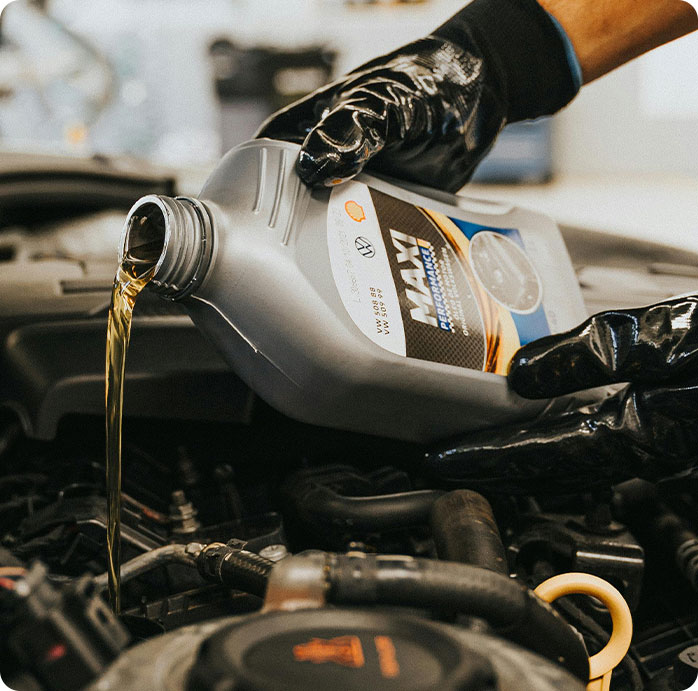
Synthetic oil, on the other hand, remains fluid even in extreme cold. As soon as you turn the key, it circulates instantly to protect every component. We regularly see this with our customers who drive electric and hybrid vehicles: their combustion engines benefit enormously from this immediate protection during frequent start-ups.
Extreme heat resistance
Summer brings its own challenge: intense heat. Under the hood, temperatures can easily reach 100°C or more, especially in Montreal’s dense traffic. Conventional oil degrades more rapidly under these conditions, losing its lubricating properties and creating harmful deposits.
Synthetic oil is much more resistant to heat. It maintains its viscosity and continues to protect your engine, even on those long summer days when you’re stuck in traffic on the Jacques-Cartier Bridge.
Prolonged durability
Here’s an advantage that often surprises our customers: synthetic oil lasts longer. Where conventional oil requires changing every 5,000 km, a quality synthetic can easily last 8,000 to 12,000 km, depending on your vehicle and driving habits.
Do the math: yes, synthetic oil costs about $30 to $40 more per change, but if you almost double the interval between changes, you save both money and time. Not to mention that your engine accumulates less mileage with degraded oil.
Engine cleanliness
A clean engine is a happy engine. Synthetic oil contains fewer impurities from the outset and degrades less quickly, which means less sludge and deposits in your engine. These residues can clog oil passages and reduce lubrication efficiency.
After years of dismantling engines, our mechanics can often guess which type of oil has been used simply by observing the cleanliness of the internal components. The difference is remarkable.
The advantages of conventional oil

The budget factor
Let’s be honest: conventional oil costs less to buy. For certain budgets, especially if you drive an older vehicle with a lot of mileage, quality conventional oil remains a perfectly valid and responsible choice.
Sufficient for several vehicles
If you drive an older car without advanced technology, make mainly short city trips, and religiously change your oil every 5,000 km, conventional oil may be just what you need. Many of our customers who own work vans with over 200,000 km still use conventional oil successfully.
When synthetic oil becomes essential
Modern, high-performance vehicles
Today’s engines are true marvels of engineering. More compact, more powerful, more efficient, they also operate at temperatures and tolerances that would have been impossible 20 years ago. Most manufacturers now recommend – or even require – synthetic oil.
Consult your owner’s manual. If the manufacturer specifies synthetic oil, it’s not a marketing suggestion: it’s a technical necessity to protect your investment and maintain your warranty.
Demanding driving conditions
You use your vehicle for:
- Towing a trailer or boat?
- Repeated short trips (less than 10 km)?
- A lot of city driving with frequent stops?
- Extreme temperatures (our harsh winters or scorching summers)?
All these situations stress your engine beyond “normal driving”. Synthetic oil gives you that extra margin of safety to protect your engine against premature wear.
Extending the life of a precious vehicle
If you plan to keep your vehicle for 10 years or 200,000 km, the investment in synthetic oil more than pays for itself. A better-protected engine maintains its performance, consumes less oil and is much less likely to require costly repairs.
We have loyal customers who have exceeded 300,000 km with their original engine, and the synthetic oil used from the outset has played a major role in this remarkable longevity.
Synthetic blended oil: a compromise?
There are also semi-synthetic oils, which combine conventional and synthetic oils. This is an interesting compromise that offers some of the advantages of synthetics at an intermediate price. For many drivers, it’s the perfect middle ground.
However, if your vehicle specifically requires full synthetic oil, don’t try to save a few dollars by using a semi-synthetic. The manufacturer’s specifications are non-negotiable.
What we really recommend
At Alex Pneu et Mécanique, our approach is simple: we recommend what’s really right for your situation, not what makes us the most money. Here’s our philosophy:
For newer vehicles (less than 10 years old): synthetic oil is generally the best choice. You protect your investment and meet the manufacturer’s requirements.
For older vehicles in good condition: let’s discuss your driving habits and your plans for the vehicle. Conventional quality oil may suffice, but synthetic could significantly extend the life of your engine.
For all vehicles: respect oil change intervals and never wait for the oil warning light to come on. A regular oil change with conventional oil is better than a careless change with synthetic.
Beyond oil type: other factors
The right viscosity
Even more important than the choice between synthetic and conventional, is using the correct viscosity recommended by the manufacturer. A 5W-30 cannot be replaced by a 10W-40 simply because that’s what was on special.
When you change your oil at Alex, we always check the exact specifications for your vehicle. It’s a detail that makes all the difference.
Filter quality
An excellent oil with a poor-quality filter is like putting premium gasoline in a tank with a hole in it. We always use filters that meet or exceed the manufacturer’s standards.
Complete inspection
Every oil change is also an opportunity to inspect your vehicle. We check fluid levels, belt condition, leaks and more. Often, we can prevent a major problem simply by noticing a detail during routine maintenance.
Environmental impact
Let’s talk about the environment too. By lasting longer, synthetic oil generates less waste. Fewer empty containers, less used oil to recycle, fewer trips to the garage. It’s a small gesture, but multiplied by millions of vehicles, it counts.
At Alex, we recycle 100% of the used oil we collect. Whether you choose synthetic or conventional, you’re contributing to this eco-responsible approach.
The verdict: which oil to choose?
There’s no single answer. Your choice should depend on..:
- Your vehicle: age, mileage, manufacturer’s recommendations
- Your driving habits: towing, short trips, extreme conditions
- Your budget: consider the long-term cost, not just the initial price
- Your plans: how long do you plan to keep the vehicle?
The good news? There’s no such thing as a bad choice if you respect your vehicle’s specifications and maintain a rigorous maintenance schedule. Quality conventional oil, changed regularly, protects an engine very well. Synthetic oil simply offers extra protection and flexibility.
Your engine deserves the best
Whatever oil you choose, the important thing is never to neglect this essential maintenance. Your engine works hard for you every day – in traffic jams, at -30°C in winter, in the heat of summer. With a little regular attention, it will serve you faithfully for years to come.
Our team at Alex Pneu et Mécanique is always ready to discuss with you the best options for your specific situation. We take the time to explain, demonstrate and advise honestly, because your trust and safety are our priorities.
Need an oil change or personalized advice? Drop in or schedule your appointment today. We’ll guide you to the best choice for your vehicle and your budget, with the honesty we’ve been known for for over 40 years.